Polyvinyl Alcohol 2488, commonly known as PVA 2488, is one of the most widely used water-soluble polymers in industries such as construction chemicals, textile sizing, paper processing, adhesives, coatings, ceramics, emulsions, and packaging. Due to its excellent film-forming ability, strong adhesion, emulsification performance, and chemical stability, PVA 2488 has become an essential raw material for manufacturers worldwide. However, one of the most frequently asked questions among importers, distributors, and industrial users is: what is the shelf life of PVA 2488, and how can it be stored correctly to maintain performance over time? Understanding the shelf life of PVA 2488 is critical because improper storage conditions can directly affect viscosity, solubility, bonding strength, and final product quality. Whether you are producing tile adhesives, putty powder, textile coatings, or paper chemicals, maintaining stable polymer quality is essential for consistent production results.
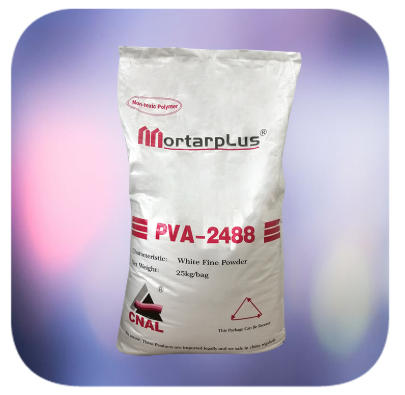
PVA 2488 is a partially hydrolyzed polyvinyl alcohol with a hydrolysis degree typically around 88% and viscosity generally ranging from 45–56 mPa.s. It appears as a white granular or powder material and dissolves in hot water to form a transparent adhesive solution. The “24” in PVA 2488 generally refers to viscosity grade, while “88” refers to the hydrolysis degree. This balance provides excellent water solubility and strong adhesion, making it suitable for numerous industrial formulations. PVA 2488 is highly valued for its film strength, flexibility, emulsifying properties, and compatibility with cement-based systems. It is commonly used in dry mix mortar, construction additives, textile warp sizing, ceramic binders, paper coatings, glue formulations, and emulsion polymerization systems. Due to its hygroscopic nature, however, the product can absorb moisture from the surrounding environment if not properly protected. This characteristic directly impacts its shelf life and storage requirements.
At Haoshuo, our PVA 2488 products are mainly developed for construction industry applications. We focus on supplying stable and high-performance PVA solutions for dry mix mortar manufacturers, tile adhesive producers, wall putty factories, gypsum-based products, self-leveling compounds, and cement-based construction materials.
Compared with general-purpose PVA products on the market, Haoshuo Construction Grade PVA 2488 is optimized for:
Improving mortar adhesion strength
Enhancing flexibility and crack resistance
Increasing workability and water retention
Reducing shrinkage in cement-based systems
Supporting stable performance in drymix formulations
As a professional construction chemical manufacturer, Haoshuo focuses on supplying reliable raw material solutions for the global construction materials industry rather than food-grade or pharmaceutical-grade applications.
Under standard storage conditions, the shelf life of PVA 2488 is typically between 12 months and 24 months depending on the manufacturer, packaging quality, and storage environment. Some suppliers indicate a shelf life of approximately 12 months under controlled warehouse conditions, while other industrial-grade manufacturers specify up to 24 months when stored in original sealed packaging in dry environments.
The shelf life of PVA 2488 mainly depends on the following factors:
· Storage temperature
· Humidity exposure
· Packaging integrity
· Ventilation conditions
· Exposure to sunlight
· Contamination risks
· Frequency of package opening
Although PVA 2488 is chemically stable, prolonged exposure to moisture and high temperatures can gradually affect product flowability and dissolution performance. In some cases, moisture absorption may cause clumping, lump formation, or partial gelation. Therefore, even though the polymer itself remains relatively stable, its processing performance can decline if storage conditions are poor.
For industrial manufacturers, shelf life management is not simply about avoiding expired products. It directly impacts production consistency, procurement planning, inventory turnover, and customer satisfaction. In industries such as dry mortar and tile adhesives, stable viscosity and dissolution properties are extremely important. If aged or improperly stored PVA 2488 is used, it may lead to inconsistent bonding performance, poor workability, or reduced film strength in the final product.
Textile manufacturers also rely heavily on stable PVA properties for warp sizing and yarn protection. Any variation in viscosity or solution stability can influence weaving efficiency and fabric quality. In paper and coating industries, degraded PVA can reduce coating smoothness and adhesive performance. Therefore, understanding the shelf life of PVA 2488 helps manufacturers optimize purchasing cycles and minimize waste while ensuring stable product performance.
Proper storage is the key factor in maximizing the shelf life of PVA 2488. Most manufacturers recommend storing the product in cool, dry, and well-ventilated environments. The ideal storage temperature is generally between 5°C and 30°C. High humidity should be avoided because PVA is highly hygroscopic and can absorb moisture quickly.
Here are the most important storage recommendations:
PVA 2488 should always remain in tightly sealed original packaging until use. Open bags should be resealed immediately after material removal to prevent moisture absorption. Many suppliers use multi-layer kraft paper bags with PE liners to improve moisture resistance.
Humidity is the biggest enemy of PVA 2488 storage stability. Exposure to humid air can lead to powder agglomeration and reduced solubility. Warehouses should maintain low relative humidity whenever possible. Some industrial users also use desiccants in storage areas for additional protection.
Although PVA 2488 is relatively stable under normal conditions, prolonged sunlight exposure can increase packaging temperature and accelerate material degradation. Storage areas should therefore remain shaded and cool.
Avoid placing PVA 2488 near boilers, steam pipes, heaters, or high-temperature production equipment. Excessive heat may affect polymer stability and shorten effective shelf life.
PVA 2488 should not be stored together with strong oxidizers, corrosive chemicals, or volatile solvents. Cross-contamination may alter chemical properties and negatively affect performance.
Even if PVA 2488 has not technically exceeded its shelf life, improper storage may reduce its usability. Manufacturers should inspect stored material regularly before production use. Common warning signs include:
· Hard lumps or caking
· Yellowing or discoloration
· Abnormal odor
· Reduced dissolution speed
· Gel particles in solution
· Viscosity inconsistency
· Reduced adhesive strength
If these symptoms appear, laboratory testing is recommended before large-scale industrial use. Some slightly aged materials may still be usable for lower-grade applications, but critical formulations often require fresh material to guarantee quality consistency.
Many industrial buyers purchase PVA 2488 in bulk quantities for export or long-term manufacturing needs. To maximize material lifespan and reduce waste, several best practices can be implemented.
The First-In-First-Out inventory system helps ensure older stock is consumed before newly arrived material. This minimizes the risk of long-term warehouse aging.
Sudden fluctuations in humidity and temperature can negatively impact polymer stability. Warehouses with controlled environments provide better long-term storage reliability.
High-quality packaging plays a significant role in shelf life preservation. Moisture-resistant inner liners and sealed pallet wrapping can greatly improve storage stability during transportation and warehousing.
Repeated opening and exposure to air accelerate moisture absorption. Industrial users should divide large packages into smaller sealed containers when partial usage is required.
The long shelf life and versatile properties of PVA 2488 make it suitable for a wide range of industries.
PVA 2488 is widely used in tile adhesives, putty powder, self-leveling compounds, gypsum products, and cement-based mortars. It improves bonding strength, flexibility, crack resistance, and water retention.
In textile applications, PVA 2488 serves as an excellent warp sizing agent, improving yarn strength and reducing breakage during weaving operations.
PVA 2488 is a key ingredient in water-based glues and adhesives because of its strong film-forming and bonding capabilities.
Paper manufacturers use PVA 2488 in coatings and surface sizing to improve paper strength, smoothness, and printability.
Ceramic manufacturers use PVA 2488 as a binder to improve green strength and processing stability.
PVA 2488 is commonly used as a protective colloid in VAE emulsion and polymer dispersion systems because of its excellent emulsifying performance.
When searching for PVA 2488 shelf life information, buyers may notice that some suppliers claim 12 months while others claim 24 months or longer. This difference usually results from several factors including production technology, packaging materials, transportation methods, and warehouse conditions.
Manufacturers with advanced production systems and moisture-proof packaging can often provide longer recommended shelf life periods. Additionally, laboratory testing standards vary between suppliers. Some manufacturers use conservative shelf life estimates to ensure stable performance under diverse storage conditions.
Global demand for PVA 2488 continues to increase because industries increasingly require environmentally friendly, water-soluble polymers with excellent adhesion and film properties. Construction chemicals, eco-friendly packaging, water-based coatings, and textile processing are major growth sectors driving PVA consumption worldwide. Online industrial discussions and technical communities also frequently discuss the performance differences between PVA 1788 and PVA 2488, especially regarding viscosity and thickness characteristics in formulation systems.
This growing demand means that inventory management and proper storage practices are becoming even more important for distributors and manufacturers handling large-volume shipments.
Understanding the shelf life of PVA 2488 is essential for manufacturers, importers, and industrial users seeking stable product quality and efficient production management. In most cases, properly stored PVA 2488 offers a shelf life ranging from 12 to 24 months while maintaining excellent solubility, adhesion, and film-forming performance. The key to maximizing shelf life lies in proper storage conditions including sealed packaging, humidity control, moderate temperature, and protection from contamination. By implementing correct storage practices and inventory management systems, businesses can significantly reduce material waste, improve production consistency, and achieve better long-term cost efficiency. As demand for high-performance water-soluble polymers continues to grow across construction, textile, adhesive, and coating industries, PVA 2488 remains one of the most reliable and versatile polymer solutions available in the global market.
Related News and Blogs
24
Aug., 2024
Let's meet Indonesia Coatings Exhibition 2024
The 10th Paintistanbul & Turkcoat Fair will be held at the Istanbul Exhibition Center in Turkey from May 8th...
19
Nov., 2021
What Causes A Cracked Putty Layer?
The one-off scraping thickness of the putty is directly proportional to the curing shrinkage strength, which increases in proportion to the tendency of the putty to crack.
04
Nov., 2021
Whether you are carrying out small repairs or building walls, knowing how to mix the mortar needs to be precise. If the mortar is too dry, the blocks will not stick together properly. If it is too wet, flowing mortar can spill out of the joints, resulting in wasted time and materials for clean-up.
25
Oct., 2021
The Effect of Winter Construction Temperature on Tile Adhesives
As we all know, tile adhesive is generally made from cement and mixed with various additives. It is mixed with water at the construction site and then applied to the wall or floor.

Get in Touch
Interested in how our HPMC can enhance your personal care formulations? Contact us to request a free sample and experience the superior quality of our cellulose ether products.