In modern dry-mix construction materials, small additives can make a major difference in site performance. For tile adhesive, cement mortar, plaster, render, masonry mortar, and repair mortar, one of the most important additives is MHEC, also known as Methyl Hydroxyethyl Cellulose or HEMC. It is a non-ionic cellulose ether widely used as a thickener, water-retention agent, and rheology modifier in cement-based building materials. In tile adhesive formulations, MHEC helps improve workability, open time, adhesion, anti-sag performance, and final installation reliability.
For buyers, however, choosing MHEC is not only about asking for a price per kilogram. The correct grade affects construction efficiency, bonding performance, mortar consistency, water retention, and customer satisfaction. A low-cost product that does not match your formula may cause tile slip, fast drying, poor spreading, weak adhesion, or unstable batch quality. This guide explains how MHEC works in tile adhesive and cement mortar, what specifications buyers should compare, and how to choose a reliable construction-grade MHEC supplier.
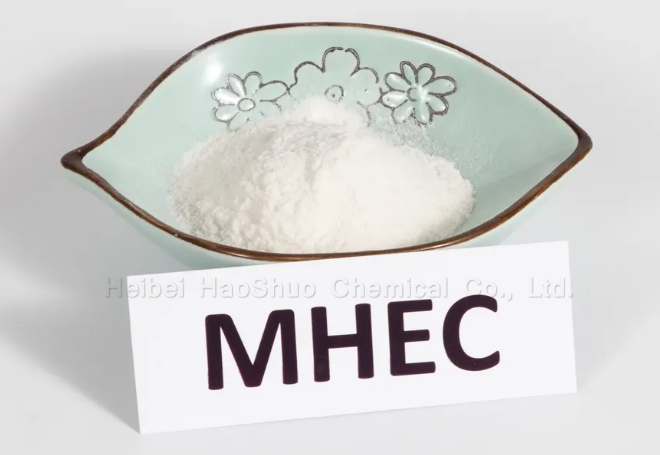
MHEC, or Methyl Hydroxyethyl Cellulose, is a water-soluble cellulose ether used in many construction chemical formulations. It is commonly supplied as a white or off-white powder and is added in small dosages to dry-mix mortar systems. When mixed with water, MHEC hydrates and helps control the viscosity and rheology of the fresh mortar.
In cement-based products, MHEC does not act like cement, sand, or filler. Instead, it works as a functional additive. It helps the mortar hold water, spread smoothly, maintain a workable consistency, and stay stable during application. In tile adhesive, it is especially valuable because installers need enough open time to place and adjust tiles before the adhesive dries or skins over.
Tile adhesive usually contains cement, graded sand, fillers, polymer additives, and cellulose ether. MHEC is one of the key materials used to improve the application behavior of cement tile adhesive. It supports water retention, bonding strength, thickening, and workability.
For a tile adhesive manufacturer, MHEC helps solve several common performance problems:
Cement needs water for hydration. If the tile adhesive loses water too quickly, the cement may not hydrate properly, and the adhesive layer can become weak or powdery. This is especially common in hot weather, windy conditions, high-absorption substrates, or thin-bed applications.
MHEC helps retain water inside the adhesive mixture. This gives cement more time to hydrate and helps maintain stable bonding strength. Good water retention also allows installers to work more comfortably, especially on large-area tiling projects.
Open time is the period during which tiles can still be placed onto the adhesive and achieve proper bonding. If the adhesive skins over too quickly, tiles may not bond well even if the surface still looks wet.
MHEC helps extend open time by slowing rapid water loss and improving surface stability. This is useful for large-format tiles, exterior walls, commercial flooring projects, and construction sites in warm climates. HEMC/MHEC is also commonly described as helping improve open time and adjustment time in tile adhesive formulations.
Good tile adhesive should be easy to mix, spread, comb, and adjust. If the material is too sticky, too loose, too dry, or too heavy under the trowel, installers will notice immediately.
MHEC improves the fresh mortar’s consistency, giving it a smoother and creamier texture. This helps reduce labor effort and improves application efficiency. For manufacturers selling finished dry-mix tile adhesive, better workability can become a strong selling point for contractors and distributors.
For wall tile adhesive, anti-sag performance is critical. If tiles slide after placement, the installer must spend extra time adjusting tile position, and the finished wall may become uneven.
Higher-viscosity or modified MHEC grades can improve thixotropy and anti-slip performance. This helps the adhesive hold tiles in place during vertical installation. For heavy tiles, large-format tiles, exterior wall tiles, and stone-like ceramic tiles, buyers should pay special attention to the anti-sag performance of the selected MHEC grade.
MHEC does not replace cement or redispersible polymer powder, but it supports the overall bonding system by improving water retention, open time, and contact between adhesive, tile, and substrate. When the adhesive remains workable for longer and cures more evenly, the final bond is usually more reliable.
Besides tile adhesive, MHEC is also widely used in cement mortar and dry-mix mortar systems. Common applications include:
· Cement plaster and render
· Masonry mortar
· Skim coat and wall putty
· Repair mortar
· Tile grout
· Self-leveling underlayment systems
· Exterior insulation and finishing systems
In cement mortar, MHEC helps improve water retention, consistency, pumpability, sag resistance, and application smoothness. It also reduces the risk of rapid drying, cracking, and poor surface finishing. For mortar manufacturers, this means a more stable product that performs better across different jobsite conditions.
When purchasing MHEC for tile adhesive or cement mortar, buyers should not only ask for “MHEC powder.” Different grades can perform very differently. The following specifications are important.
Viscosity is one of the most important selection factors. Higher viscosity grades usually provide stronger thickening, better anti-sag performance, and improved stability for vertical applications. Lower viscosity grades may provide easier spreading and better flow for certain mortar systems.
For tile adhesive, many suppliers offer medium-to-high viscosity MHEC grades. For cement plaster or general mortar, the choice depends on desired consistency, application method, local climate, and formula design.
Water retention determines how well the mortar keeps water during application and early curing. Buyers working in hot regions, dry climates, or high-absorption substrates should give special attention to this property. Strong water retention helps reduce fast drying, supports cement hydration, and improves construction reliability.
For construction projects in high-temperature regions, heat resistance is an important factor. Some MHEC/HEMC grades are preferred in summer construction because they maintain better water retention and workability under warmer conditions. One referenced supplier notes that HEMC can be more suitable for summer construction around 45–50°C, with advantages in water retention, heat resistance, anti-sagging, and open time.
Good MHEC should disperse well in the dry-mix system and hydrate properly when mixed with water. Poor dispersion may cause lumps or inconsistent mortar performance. For industrial buyers, stable dissolution behavior helps improve production consistency and reduces complaints from end users.
Moisture content affects storage stability and product quality. Buyers should ask for a technical data sheet and check whether the supplier provides consistent quality control for each batch. Stable ash content and purity are also important for premium construction formulations.
Tile adhesive and cement mortar often include RDP, starch ether, calcium formate, defoamer, water reducer, or other functional additives. MHEC must be compatible with the full formula. Compatibility with cement, fillers, and additives is important because poor compatibility may lead to unstable performance or formula failure.
The right MHEC grade depends on your final product and target market. A simple wall tile adhesive for indoor use may not need the same grade as a high-performance C2 tile adhesive for exterior applications. A cement plaster for hand application may require different rheology from a spray-applied render.
For standard tile adhesive, buyers usually focus on workability, open time, water retention, and cost balance. For large-format tile adhesive, anti-sag and extended open time become more important. For exterior wall tile adhesive, water retention, heat resistance, and adhesion stability should be prioritized. For cement mortar, buyers should consider whether the mortar is used for plastering, masonry, repair, leveling, or decorative finishing.
A good supplier should help buyers select the grade according to formula, climate, application method, and target performance instead of offering only one universal product.
Many buyers choose MHEC only by viscosity and price. This can lead to performance problems. Two products with similar viscosity may have different water retention, workability, gel temperature, modification level, and compatibility with cement.
Another mistake is testing MHEC only in water. MHEC performance should be tested in the real mortar formula because cement type, sand grading, filler, RDP, and water demand all affect the final result.
Some buyers also ignore local construction conditions. A formula that works well in a mild climate may dry too fast in hot, dry, or windy conditions. For export markets, it is better to test MHEC under the target application environment.
Before placing a bulk order, buyers should request:
· Technical data sheet
· Recommended application and dosage range
· Viscosity test method
· Sample for lab testing
· Batch quality control report
· Packaging and shelf-life information
· Formulation support for tile adhesive or cement mortar
· Loading quantity and delivery lead time
· OEM packaging availability if needed
Packaging is also important for importers and distributors. MHEC is commonly packed in moisture-resistant bags, often 25 kg per bag, with palletized shipment for container loading. Some suppliers also support OEM bag design for distributors and construction chemical brands.
For tile adhesive and cement mortar manufacturers, stable supply is just as important as product performance. A reliable MHEC supplier should understand dry-mix mortar applications, provide consistent quality, support bulk orders, and help customers adjust grades based on formula requirements.
Choosing the right construction-grade MHEC can help your finished products achieve better water retention, smoother workability, longer open time, stronger anti-sag performance, and more stable bonding. Whether you produce tile adhesive, cement plaster, masonry mortar, repair mortar, or other dry-mix materials, MHEC is a key additive that directly affects jobsite performance.
MHEC for tile adhesive and cement mortar is not a simple commodity. It is a performance additive that influences how the mortar mixes, spreads, holds water, bonds, and cures. For buyers, the best choice depends on viscosity, water retention, heat resistance, compatibility, application scenario, and supplier support.
If you are sourcing MHEC for construction use, start with your target formula and application requirements. Then compare technical specifications, request samples, test in your actual mortar system, and work with a supplier that can provide stable quality and formulation guidance. A suitable MHEC grade can help you produce more reliable tile adhesive and cement mortar products for demanding construction markets.
Related News and Blogs
24
Aug., 2024
Let's meet Indonesia Coatings Exhibition 2024
The 10th Paintistanbul & Turkcoat Fair will be held at the Istanbul Exhibition Center in Turkey from May 8th...
19
Nov., 2021
What Causes A Cracked Putty Layer?
The one-off scraping thickness of the putty is directly proportional to the curing shrinkage strength, which increases in proportion to the tendency of the putty to crack.
04
Nov., 2021
Whether you are carrying out small repairs or building walls, knowing how to mix the mortar needs to be precise. If the mortar is too dry, the blocks will not stick together properly. If it is too wet, flowing mortar can spill out of the joints, resulting in wasted time and materials for clean-up.
25
Oct., 2021
The Effect of Winter Construction Temperature on Tile Adhesives
As we all know, tile adhesive is generally made from cement and mixed with various additives. It is mixed with water at the construction site and then applied to the wall or floor.

Get in Touch
Interested in how our HPMC can enhance your personal care formulations? Contact us to request a free sample and experience the superior quality of our cellulose ether products.