We depend on sturdy technical for Good Water Retention HPMC,{关键词},{关键词},{关键词},{关键词}.We are going to empower people by communicating and listening, Setting an example to others and learning from experience.The product will supply to all over the world, such as Palestine ,Philippines ,Malta ,United States ,Indonesia .Welcome to visit our factory and welcome your order! For further inquiries, you should do not hesitate to contact us.The packing of nominated brand is our a further distinguishing feature.We will continue to do our best effort to service and satisfy you! Sincerely welcome you to join us!.Finest efforts will likely be produced to give you the ideal service and goods.We will try our best to satisfy your requirements with high quality products, the best prices and prompt delivery.Our products are the best..We are in continuous service to our growing local and international clients.We will reply you when we receive your inquiries.Also you are able to come to our business by yourself to get further knowing of us.We will initiative to participate in international competition to be a first, class manufacturer of this product in the world.
Application

The most important property of hydroxyethyl cellulose powder is that it acts as a thickener, in creasing the viscosity of the liquid,and its thickening depends on its concentration. If you're searching for a versatile solution that enhances the performance of your products, look no further than Hydroxyethyl Cellulose (HEC) powder.

The gypsum special grade hydroxypropyl methyl cellulose HPMC has the characteristics of high water retention, dispersibility, good fineness, good workability and easy dissolution. widely used in gypsum products like gypsum plaster, adhesive plaster, embedded gypsum, tile adhesives etc.

Daily Chemical Products Additive
Daily Chemical HPMC has a variety of properties such as thickening, foam stabllization,emulifiation, and easy dispersion. Shampoo Additive HPMC has good compatibility with various additives of other daily chemical products. It is widely used in detergents, shower gels, shampoos, hand sanitizers, and laundry liquid and other products.

Tile Adhesive Additive HPMC can ensure the smooth construction on difterent base surtaces, even when the ambient temperalure is relalively harsh, the tile adhesive can be given a long enough open time and adjustable time.

In gypsum products, the focus is on water retention, retardation and lubrication. Different gypsum has different effects on product performance, so thickening, water retention, and retardation determine the quality of gypsum building materials.

Adding hydroxypropyl metylellulose can improve anti-sip performance, improve wetting performance, thicken, improve batch scraping and slipping, easy to level, improve surface performance and strength, and have very good compatibility with other additives.

Hydroxypropyl metylcellulose is a commonly used raw material in powdered building materials, which greatly improves the slip performance and anti-sag performance of the construction, improves the wettability, improves the anti-slip performance of the putty, improves the leveling effect of the putty, and improves the construction eficlency.

Technical Guidelines for Hydroxypropyl Methylcellulose (HPMC)
As a professional manufacturer of architectural-grade HPMC, we provide you with comprehensive technical guidance and problem-solving support throughout the production and application processes.

How much do you know about Hydroxypropyl methyl cellulose(HPMC)?
Hydroxypropyl methyl cellulose (HPMC) is a non-ionic cellulose ether obtained by cellulose alkalization, etherification, neutralization and washing. HPMC has good thickening, dispersing, emulsifying, film-forming properties, etc.It is the first choice for production of high quality building materials additives.

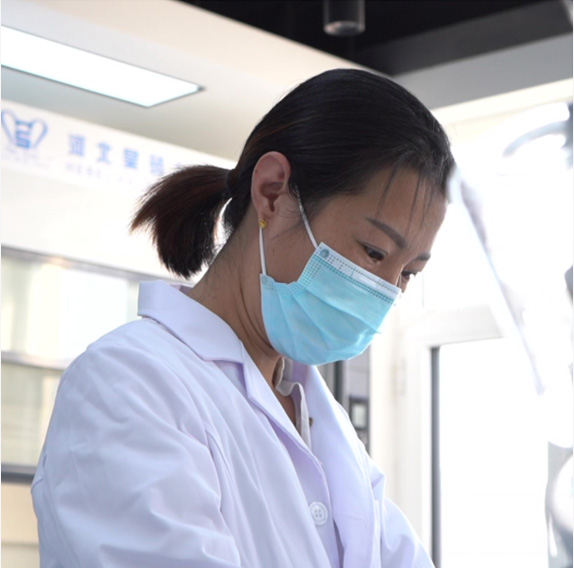
We have both Chemical Lab and Application Lab to ensure each order's best satisfaction

How to improve the adhesion of putty
When encountering the projects that have been constructed, it is found that the adhesion of putty on the exterior wall is poor, the following methods can be adopted to improve the adhesion of putty:

Take the required amount of hot water into the container and heat to above 85., stir slowly and add the product gradually The cellulose initially floats on the water, but gradually disperses in water and forms homogeneous slurry. Goon stirring until it cools down and becomes clear


Quick Find
Faq
What is the main use of 1-Hydroxypropyl methylcellulose (HPMC)?
How to judge the quality of HPMC?
Is there any relationship between powder loss in putty and HPMC?
What are the differences between HPMC and MC?
News
27
Aug., 2026
RDP Powder for EIFS/ETICS Mortar: Buyer's Guide
Learn how to select RDP powder for EIFS/ETICS adhesive and base coat mortar, including performance targets, dosage trials, testing and supplier checks.
17
Aug., 2026
Haoshuo Chemical's HPMC will be showcased at the 2026 Uzbekistan Coatings Exhibition
Hebei Haoshuo Chemical Co., Ltd. will participate in the Uzbekistan Coatings Show 2026 , held from September 16th to 18th, 2026 at the Anhor Park Expo Exhibition Center in Tashkent, Uzbekistan.
27
Jun., 2026
24
Jun., 2026
Request a Quote
+ 86 181 3228 9294

Get in Touch
Interested in how our HPMC can enhance your personal care formulations? Contact us to request a free sample and experience the superior quality of our cellulose ether products.